
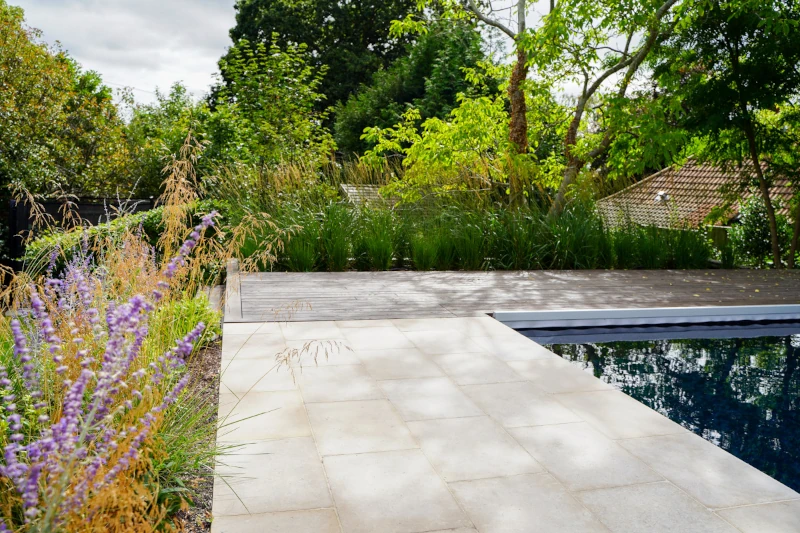
If you’re thinking about a garden upgrade this year, something to strongly consider is switching from traditional timber to composite decking for patios, decked and leisure areas.
Composite is a strong contender to traditional wood, because of how it’s designed to be robust, safe and low maintenance. All while delivering visual appeal without compromise.
In our guide to composite decking
The benefits of composite vs timber decking
Disadvantages of composite decking
Popular garden uses for composite decking
No-obligation composite decking quote
What Is Composite Decking
At its simplest, composite decking is a high-performance, “man-made” alternative to traditional timber. While wooden decking is cut from natural trees like pine, cedar or oak, composite is an engineered product designed to solve the common pitfalls of natural wood, such as rot, warping and splintering.
To choose the right product for your garden, it helps to understand the different options available:
1. Material Composition
- Wood-Plastic Composite (WPC): The most common type, made from a blend of recycled wood fibres and plastic polymers. The plastic protects the wood from moisture, while the wood provides structural strength.
- Mineral-Based Composite (MBC): A “next-generation” option (like Millboard) contains no wood. Instead, it uses minerals and resins to create a board that is immune to moisture and rot.
2. Board Structure
- Hollow Boards: These feature “honeycomb” internal channels. They are lightweight and more budget-friendly but can be less durable and may trap condensation if not installed with the correct end-caps.
- Solid Boards: These are solid all the way through, offering greater strength, better sound absorption underfoot, and a feel that much more closely mimics heavy natural timber.
3. Outer Protection
- Uncapped Composite: Early composite designs were “uncapped,” meaning the wood-plastic blend was exposed to the elements. These are more prone to staining and fading over time.
- Capped Composite: These boards feature an extra protective “shield” or sleeve bonded to the core. This cap makes the boards highly resistant to UV fading, scratches and stubborn stains like red wine or grease.
This combination of engineering techniques means composite decking is able to significantly outperform traditional wood – especially in the unpredictable British weather.

Key Benefits Of Composite Decking vs Timber
When making a direct comparison with traditional timber, it’s clear to see high quality composite decking wins hands down for several good reasons.
Longer Life Span
Timber decking is prone to warping, splitting and rotting – especially in the damp British climate – and usually needs replacing after 10 to 15 years even if maintained. In contrast, premium composite decking can last 25 to 30 years (or more) with minimal upkeep.
Fade Resistant
Quality composite boards are uniquely engineered with UV-stable pigments to ensure a depth of colour and variation that doesn’t fade or ‘silver’ like natural wood over years of exposure to sunshine.
Stain Resistant
Unlike timber which will soak up stains like mud, red wine or BBQ sauce, composite is resistant to spills and easy to clean after any mishaps. All it needs is a quick wash with soapy water.
Exceptional Safety
Textured high-grip surface finishes, low water absorption and protective layers all make composite boards better at repelling water and resisting algae growth – the main cause of slippery decks. This makes them one of the safest anti-slip choices for wet conditions, pool or spa surrounds.
Aesthetically Appealing
With composite decking there are many more colours, textures and finishes to choose from – so you can precisely match your boards to your desired outdoor style. There’s no need to worry about the decking looking ‘plastic’ either, as care is taken to mimic the natural wood grain. Millboard, for example, hand-moulds each board from carefully selected 100-year-old oak masters to capture the organic grain and texture of wood.
Superior Durability (weather and insect resistant)
Engineered with a recycled blend of wood fibres and plastics, composite decking possesses superior strength and longevity than timber. With no to low wood content, composite cannot absorb moisture – so neither will it crack, warp or rot over time. Nor will it appeal to wood-boring insects which can eventually damage the structural integrity of a timber deck.
Low Maintenance
Unlike wood decking that needs annual sanding, staining or oiling to keep it in good nick, all it takes to keep composite decking clean is regular brushing to remove any debris from footfall or overhanging trees, spot cleaning of any spills, and a wash with warm soapy water once or twice a year.
Minimal Movement
With higher dimensional stability, composite decking won’t expand or contract significantly with temperature changes, keeping your deck looking perfectly aligned for years.
Adds Value
A quality composite decking installation will appeal to any prospective house buyer. While you may not be thinking of selling straight away, if and when you do you’ll know your deck will still look as good as new. Thereby acting as a positive selling point, rather than the problem of having to replace or negotiate over a rotting timber deck.
Eco-Friendly
Sustainability is a core reason many homeowners now choose composite over timber. At Thames Valley Landscapes, we choose to work with composite suppliers who prioritise the planet:
- Millboard (Resource Preservation): Millboard boards are 100% wood-free resin mineral composite boards, meaning they don’t put pressure on global forests. Instead the structural core uses a blend of recycled natural minerals and biopolymers (natural, biodegradable polymers) rather than purely petroleum-based plastics.
- EnviroBuild (Recycled Excellence): EnviroBuild’s Hyperion range is suitable for those prioritising a “circular economy.” Their boards are manufactured using up to 90% recycled materials—including reclaimed wood fibres and recycled plastics that would otherwise end up in landfill. Furthermore, their production is powered by 100% renewable wind energy.

Any Downsides To Composite Decking?
If budget is a consideration, then the only downside when compared to timber is the initial cost – both materials and labour (installation) costs are higher. But the finished produced will last longer (25 to 30 years compared with 10 to 15 for timber).
Over the lifespan of a composite deck – it often pays for itself within 10 years when you factor in lifetime savings on annual maintenance (sanding, staining and sealing) and repairs, not to mention full replacement every decade.
So, if you’re after a premium finish that creates a safe, stylish and enjoyable outdoor experience for family, guests and pets – then composite makes a sound choice when compared with the timber alternative.
But where’s the best place to use composite in your garden?
Where Composite Shines: Popular Garden Uses
With its high durability and enhanced safety, composite decking is ideal for high-traffic and high-moisture areas. While it’s stylish looks lend an air of elegance to key garden zones.
- Sun-Drenched Terraces: Standard timber bleaches and cracks in the sun, but premium composite decking like Millboard is highly UV-stable. It retains its rich, hand-tinted colour even in the most exposed south-facing gardens.
- Al Fresco Dining and Outdoor Kitchens: Unlike porous wood, composite is non-porous and highly resistant to stains. Whether it’s a splash of red wine, a dropped burger or a sun cream spill, the surface wipes clean without leaving a permanent mark.
- Poolside Elegance and Hot Tubs: Safety is paramount around water and composite provides exceptional grip underfoot. Because it repels water, it won’t rot from the constant splashing or chemicals associated with pools and hot tubs.
- Garden Showers and Spas: Even with the presence of soaps and shampoos composite retains its slip-resistance. It’s also mould-repellent, ensuring your private spa area stays hygienic and fresh.
- Multi-Level Gardens: With its consistent finish and matching edging/fascia options, composite is ideal for creating seamless transitions between different levels of a landscape, such as a raised dining platform leading down to a spa zone.
- Connected Zones: Because of its durability, strength and anti-slip properties, composite decking is ideal for linking single-level areas through an interconnected sequence of paths, boardwalks and walkways.
- Family Spaces: Splinter-free and never “slimy” like traditional wood, composite creates a safe, barefoot-friendly environment for children and pets to play on even when wet.

Reimagine Your Outdoor Space
Now is the perfect time to give your garden a revamp with materials that truly enhance the way you live. Composite gives you the confidence to create a space that look exquisite while working brilliantly too.
Thames Valley Landscapes are experienced and approved composite decking installers in Berkshire who can also handle the intricacies of a complete garden renovation.
Ready to upgrade your outdoor space? Book a site survey for your new composite deck today.
Tel: 01628 629720
Email: ask@tvlandscapes.co.uk
Location: We’re based in Maidenhead and cover Windsor, Marlow, Henley, Beaconsfield, Cookham and Gerrards Cross.
Clients Often Ask
Here’s how to do it safely.
1. Never place a fire pit directly on the deck
Regardless of the brand (Millboard etc.), you should never place a heat source directly onto the composite surface. Even if the fire is contained in a metal bowl, the radiant heat from the bottom can reach temperatures high enough to damage the structural integrity of the boards.
2. Use a protective barrier
To enjoy a fire pit safely, you need a “buffer” between the heat and the deck:
- Fire Pit Pads: Specifically designed heat-resistant mats (like “DeckShield”) can reflect up to 95% of radiant heat.
- Permanent Hearth: For a more aesthetic look, you can build a small “island” or hearth made of porcelain tiles, natural stone, or paving slabs to sit the fire pit on. This creates a stylish focal point while protecting the deck.
3. Choose the Right Fuel Type
- Gas or Propane (Recommended): These are much safer for composite decks. They produce consistent heat, have no flying sparks or embers and usually have a clearance gap at the bottom that stays cooler than wood-burning versions.
- Wood Burning: These are riskier due to “spitting” embers. If using wood, you must use a spark screen and a high-quality heat shield underneath.
4. Check Your Warranty
Most major composite decking manufacturers have specific clauses regarding heat damage.
Thames Valley Tip: We always recommend checking your specific decking warranty. Using a fire pit without a certified heat shield may void your warranty if the boards melt or “sag” due to heat exposure.
5. Mind the Weight
Composite decking is heavy, but so are stone or cast-iron fire pits. Ensure your deck’s sub-frame (the joists underneath) is reinforced in the area where the fire pit will sit to prevent any dipping over time.
Instead it’s a simple 3-step process at least twice a year. Though if your decking is near trees or is in a high-use area it may need cleaning more often.
Step 1 – Remove Surface Dirt
Use a stiff-bristled brush (natural bristles work best) to remove debris like leaves, soil, and other organic matter.
Step 2 – Mix a Cleaning Solution
Use a mild household detergent mixed with warm water. Avoid harsh solvents or chemicals unless specified for particular stains.
Step 3 – Scrub and Rinse
Wet the deck surface 10–15 minutes beforehand, apply the cleaning solution and scrub thoroughly. Rinse with plenty of clean water to finish.
Optional: Pressure Washing
If using a pressure washer, ensure the PSI does not exceed 2,000 and use a 40–60° fan tip. Keep the nozzle at least 300mm away to avoid damaging the surface or exposing fixings.
They’ll get the job done in half the time, with the correct tools and expert knowledge of how to get things looking ‘just right’.
They’re likely to have undergone specific training, so will understand the product and know all about the little details to create a precise and durable finish that adheres to safety and product standards.
Installation by an approved contractor also ensures compliance with manufacturer guidelines, protecting your product warranty.
By choosing an approved installer, you get peace of mind knowing that they’re vetted and experienced in being able to handle the job.